
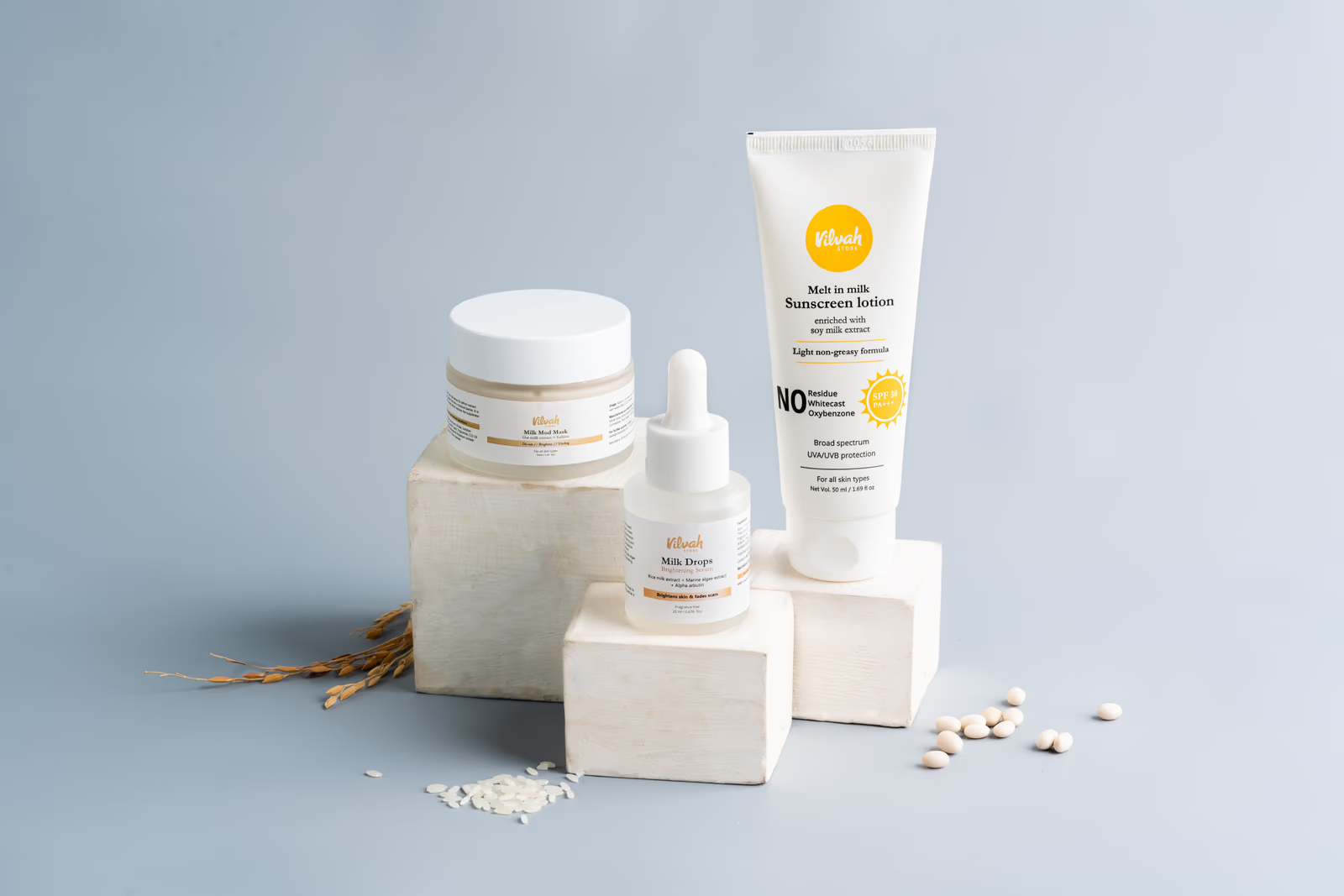
A beauty or skincare brand is a different kind of business from a med spa, and its SEO reflects that. Where a clinic is local and treatment-led, a product brand sells across a wide market, competing well beyond its own area for shoppers searching for products, ingredients, and solutions to their concerns. Beauty brand SEO is the work of being found by those shoppers, in a crowded, competitive field. Here is what it involves.
How brand SEO differs from a clinic's
The starting point is recognizing that a beauty brand's SEO is not local in the way a clinic's is. A brand is not trying to be found by people nearby so much as by the right shoppers wherever they are, searching for products like the brand's, for ingredients, or for answers to a concern the brand's products address. That means the focus shifts from local presence and treatment bookings to product visibility, content, and authority across a much broader, more competitive market. The foundations are shared, a sound site, trustworthy content, genuine authority, but they are aimed at a different kind of search and a different kind of competition.
What beauty brand SEO needs
A handful of things do most of the work for a product-selling beauty brand.
Product-search visibility. Shoppers search for products, ingredients, and product types, so a brand's product pages have to be built to be found and to convert, with genuinely useful, honest, well-presented content that both ranks and sells. Being found for what you sell is the foundation. A shopper who cannot find a brand's products when searching for exactly what those products are will simply buy from a competitor who does appear, so product-page visibility is not optional for a brand that sells online.
Content around concerns and ingredients. Many shoppers begin with a concern or a question rather than a product, so content that genuinely helps, about concerns, ingredients, and how to choose, handled honestly and within the rules, reaches shoppers earlier and guides them toward the brand's products. This kind of content widens the range of searches a brand can be found for. It also positions the brand as a genuinely helpful, credible source rather than just a seller, which builds the trust that turns a first-time visitor into a buyer.
Genuine authority and reputation. In a crowded market touching skin and health, search engines favour brands that are genuinely recognized and trusted. A brand earns this authority by becoming genuinely recognized, referenced, and recommended because it is worth it, and by building a real reputation, rather than through any scheme, which search engines increasingly catch and penalize. For a beauty brand, this genuine authority is especially valuable because it is one of the few things a smaller brand can build that a competitor cannot simply buy, and because it compounds: a brand that is genuinely recognized and trusted grows steadily harder to displace.
A technically sound, fast site. As with any site, speed, mobile experience, and sound structure are the foundation everything else rests on, and for an online store they directly affect both rankings and sales.
Meeting shoppers at every stage
One of the strengths of SEO for a beauty brand is that it can reach shoppers at every stage of how they decide, not just at the moment of purchase. Some shoppers arrive already knowing the product they want and search for it directly; a brand found for that product captures them at the point of sale. Others begin with a concern, unsure what will help, and search for answers; a brand whose content genuinely addresses that concern can reach them earlier and guide them toward the right product. Others still are comparing options or researching ingredients, and a brand that is credibly present in those searches enters their consideration.
Building for all of these, product visibility for the ready buyer, helpful content for the concern-led shopper, genuine authority for the researcher, lets a brand reach a far wider range of potential customers than focusing on product searches alone. It also mirrors how people actually shop for beauty products, which is rarely a single search but a journey from a concern or curiosity toward a purchase. A brand that meets shoppers thoughtfully along that whole journey, rather than only at the end, builds both broader visibility and the trust that turns a searcher into a customer.
The crowded-market reality
A beauty brand competes for search visibility against enormous, established names and vast marketplaces, which makes standing out harder than it is for a local clinic with a defined area. A brand will rarely out-muscle the giants on the most competitive, generic terms. But it can win the searches that fit its particular strengths, its specific products, ingredients, concerns, and point of view, where genuine relevance and authority count for more than sheer size.
This is where an independent or emerging brand's SEO earns its keep. Rather than competing head-on for the broadest terms, a brand does better to be genuinely, authoritatively relevant for the specific things that make it distinctive, and to build real authority there. Being specific and genuinely credible is how a smaller brand carves out its own visibility in a market full of larger alternatives, much as being genuinely local is how a clinic wins its area. The parallel is worth holding onto. Neither a clinic nor a brand wins by trying to beat far larger competitors at their own game; both win by being genuinely, credibly the best fit for a more specific set of searches, the clinic for its area and treatments, the brand for its particular products and point of view. Specificity, backed by genuine quality and authority, is how the smaller player competes and wins in both.
The claims care beauty content requires
Beauty content is subject to real rules about what a brand can claim, and honesty here is both a regulatory and a trust matter. Cosmetic advertising is governed in many markets, through bodies and frameworks such as the FDA, Health Canada, the ASA, and others, with genuine distinctions between a cosmetic claim and a medical or drug claim, and requirements that claims be substantiated and not misleading. Content and product descriptions have to describe what products do honestly and within those rules, rather than promising results they cannot guarantee. Handled this way, careful, honest content is not just compliant; it also builds trust with the discerning shoppers who have grown wary of beauty hype, which in a crowded market is itself a genuine advantage. Shoppers have been disappointed by exaggerated beauty claims so often that genuine honesty has become a real differentiator, so a brand willing to describe its products truthfully earns a trust that translates directly into loyalty and repeat purchases.
Where to go next
Beauty brand SEO is about being found by the right shoppers in a wide, competitive market. For the full picture, see our guide to med spa SEO and how we approach med spa SEO, and read on into local SEO for med spas and aesthetic clinics and ranking for the treatments clients search for.
Is your beauty brand genuinely findable for the specific products, ingredients, and concerns that make it distinctive, or is it lost among the larger names competing for the same broad searches?