
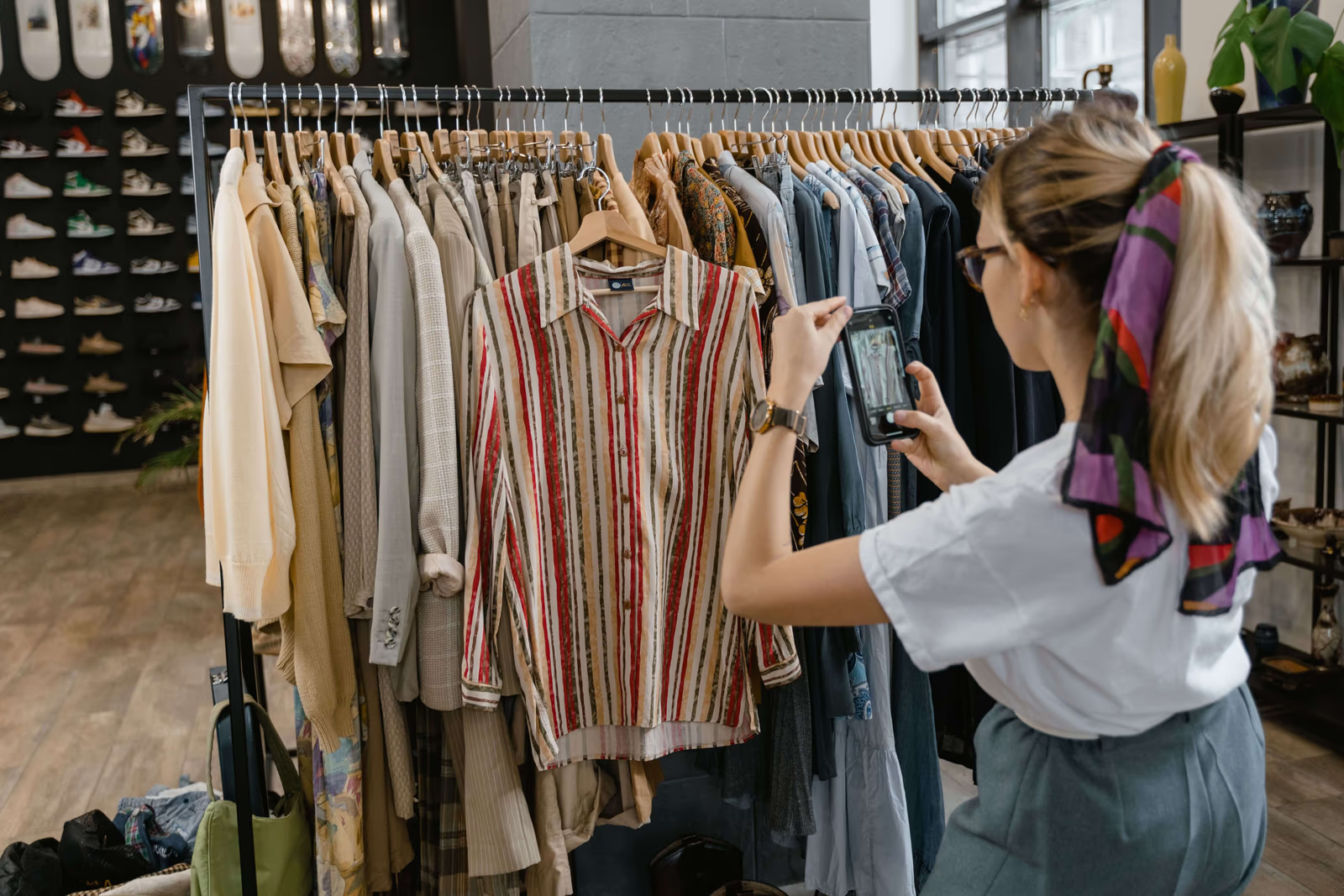
Few industries live on social media the way fashion does. Clothes are made to be seen and worn, trends move through feeds before they reach shops, and a great deal of how people discover, judge, and choose clothing brands now happens on social platforms. Influencers sit at the centre of much of it, introducing brands to audiences who trust them. But social attention only becomes a business somewhere, and that somewhere is a brand's own store. This is a look at how social and fashion influencer marketing actually work for a clothing brand, and how the owned foundation beneath them turns attention into customers.
Why social matters so much in fashion
A few things make social media unusually central to clothing brands.
It is visual, and so is fashion. Social platforms are built around images and video, which is exactly how clothes communicate. A garment shown worn, moving, styled, on a real person, is far more compelling than a flat product shot, and social is where that kind of showing naturally happens.
It is where discovery starts. A great many people now encounter clothing brands through social first, scrolling, following, being shown things, long before they search for anything specific. For fashion, social is often the top of the funnel, where awareness begins.
It is how trends travel. Fashion moves quickly, and social is where styles spread and gather momentum. A brand present there is part of that conversation; one absent from it is invisible while the conversation happens.
It builds identity and community. People do not just buy clothing brands, they identify with them, and social is where a brand shows its world, its point of view, and its people over time, turning customers into a following. For a field where people buy identity, that ongoing presence is a real asset.
Together these make some genuine social presence close to a requirement for a clothing brand, since a meaningful share of potential customers now begins there. It is worth adding that this is one of the few areas where a small clothing brand competes on reasonably level ground. Social reach is not bought outright the way advertising is; a genuinely distinctive brand with a clear point of view and good imagery can find an audience without a large budget, because what performs is content people actually want to look at. For a smaller label, that makes social one of the more accessible routes to being discovered at all.
What social does, and does not, do
It is worth being precise about social's role, because it is powerful but partial. Social media is excellent at building awareness, showing clothes in a way that makes people want them, and gathering an audience. What it does not do, on its own, is turn that attention into a sale. Someone who sees a garment and wants it has to go somewhere to buy it, and that somewhere is the brand's store.
This is the point a great deal of fashion marketing misses. Social brings people to the edge of becoming customers; the website is where they become one. A brand can build a large, engaged following and still convert little of it if the store that following lands on is generic, slow, hard to shop, or unconvincing. Social and the website are not alternatives but two halves of one path, and the attention social earns is only ever worth as much as the store that converts it.
There is a second limitation worth naming: social reach is rented. It depends on platforms whose algorithms and rules change, and on attention that is fleeting by nature. A brand whose entire presence lives on social has built on ground it does not control. Using social to build an audience while steadily drawing that audience toward an owned store converts borrowed reach into something a brand actually keeps.
How influencers work for clothing brands
Fashion influencer marketing has become one of the most significant forces in the industry, and it suits the field particularly well. Clothes need to be seen worn to be understood, and an influencer shows a garment on a real person, in real life, styled and moving, which conveys far more than a product page can. They also bring credibility: a recommendation from someone an audience already trusts carries weight that advertising struggles to match. And they bring reach into communities a brand could not easily access on its own.
In practice, brands work with influencers in a few ways: gifting products to people who genuinely like the brand, paid partnerships for specific campaigns, longer-term ambassador relationships, and affiliate arrangements where influencers share trackable codes tied to the sales they generate. Which of these fits depends on the brand, its stage, and its budget, but the pattern that tends to work best is genuine: relationships with people who authentically like the clothes, rather than transactional promotion an audience can see through.
That authenticity matters more in fashion than almost anywhere, because audiences have grown practised at spotting paid content that feels hollow. A smaller influencer whose audience genuinely overlaps with a brand's customers, and who authentically fits the brand, is usually worth far more than a much larger one whose recommendation reads as bought. Relevance and genuine fit beat raw follower counts, and chasing the biggest reach available is one of the most common ways brands waste money on this channel. The failures follow a recognizable pattern: partnerships that feel purely transactional and persuade no one, audiences that do not overlap with the brand's actual customers, and content that disappears without ever pointing anyone toward a place they could buy. Each is avoidable with more deliberate choices about who a brand works with and where the resulting attention is meant to go.
Customers as the best content
One thing distinctive to clothing is that a brand's own customers generate some of its most persuasive social content simply by wearing the clothes. Real people in real garments, photographed in their own lives, do something no brand campaign quite achieves: they show what the clothes actually look like on ordinary bodies, in ordinary settings, which is exactly what a prospective shopper wants to know and rarely gets from polished campaign imagery.
This kind of genuine customer content is worth encouraging and, with permission, worth showcasing. It builds trust precisely because it is not the brand talking about itself, and it helps shoppers judge fit and reality in a way that reduces both hesitation and returns. Crucially, it does not have to stay on social: with the customer's consent, genuine customer imagery can live on the brand's own site, where it builds trust with everyone who visits rather than only those who happened to see a post. Content created on rented ground can be brought home to owned ground, where it keeps working. Encouraging it is mostly a matter of making it easy and worth doing: customers who love what they bought are often glad to share it, particularly when a brand notices, responds, and treats them as part of something rather than as a marketing resource. A brand that genuinely engages with the people wearing its clothes tends to receive far more of this content than one that simply asks for it.
The disclosure and honesty rules
Social and influencer marketing come with real responsibilities, and meeting them protects both the brand and its audience. The central one is disclosure: when someone is paid, gifted product, or otherwise incentivized to promote a brand, that relationship has to be clearly disclosed, under advertising rules such as the FTC's in the USA, including its endorsement guides, and the ASA's in the UK. Undisclosed paid promotion is a genuine violation, and the responsibility extends to the brands commissioning it, not to the influencers alone.
Alongside disclosure sits honesty about what is claimed. Claims made in social and influencer content are subject to the same standards as claims made anywhere, which matters especially for the sustainability and ethical claims so common in fashion, held to substantiation standards under frameworks like the FTC's Green Guides and the CMA's Green Claims Code. And where customer images are used, the customer's permission is required. These are the brand's own responsibilities to manage, and taken seriously they are not merely obligations but part of what makes the whole approach work, since an audience that senses honesty and clear disclosure trusts the recommendation more.
Measuring what actually matters
A common and costly mistake in fashion social media is measuring the wrong thing: treating followers, likes, and engagement as the goal rather than the sales they are meant to lead to. Impressive social numbers feel like success, but they are only worth what they convert into, and a brand can have a large following and very little business to show for it.
The more useful question is what the audience does: how many become customers. That reframes social from a popularity contest into what it actually is, the top of a path toward a sale, and puts the focus on whether the attention is being channelled to a store that converts it. A modest, engaged following that reliably buys is worth far more than a large one whose attention leaks away on a weak site. Judging social by the business it produces keeps the effort pointed at the goal.
What good looks like
Good social and influencer marketing for a clothing brand builds genuine awareness, desire, and community, through content that shows the clothes well and partnerships that feel authentic, and then channels all of it toward an owned store and search presence that convert and compound it. It is handled honestly, with proper disclosure, permission for customer content, and claims a brand can support. And it treats social as the beginning of a path rather than the whole of marketing, because attention that leads nowhere is a missed opportunity, while attention that feeds a strong owned foundation is how a clothing brand grows.
Where to go from here
Social and influencer marketing bring people to your brand; your store and search presence are where that attention becomes business. To go further, see how we approach clothing brand design and websites and fashion SEO, the owned foundation social effort converts through, and read into content strategy for fashion and beauty brands. For the identity all of this expresses, our guide to fashion branding covers the brand behind the presence.
Is the social attention your clothing brand earns landing on a store strong enough to convert it, or are you building an audience on rented ground while the place you actually own goes unvisited?