
Not all new patients are worth the same to a practice. A routine cleaning is welcome. A full-arch implant case, a set of veneers, or a course of Invisalign is a different matter. These are the cases that carry a practice, and the patients who want them are searching for them by name.
Ranking for those searches is one of the most valuable things a practice can do. It is also one of the more competitive, because every practice that offers these treatments wants the same patients. Here is how it works, and what it takes.
Why treatment searches are worth the effort
A patient searching "dental implants cost," "veneers before and after," or "how much is Invisalign" is not idly curious. They are researching a decision they have mostly already made. They are comparing options, weighing cost, and deciding who to trust with it. That makes them some of the highest-intent, highest-value patients you can reach.
The math is simple. A single implant or veneer case can be worth more than dozens of routine visits. Even a modest improvement in how often you appear for these searches can change the shape of a practice's year.
What each treatment's patients are looking for
The treatments differ, and so do the searches around them.
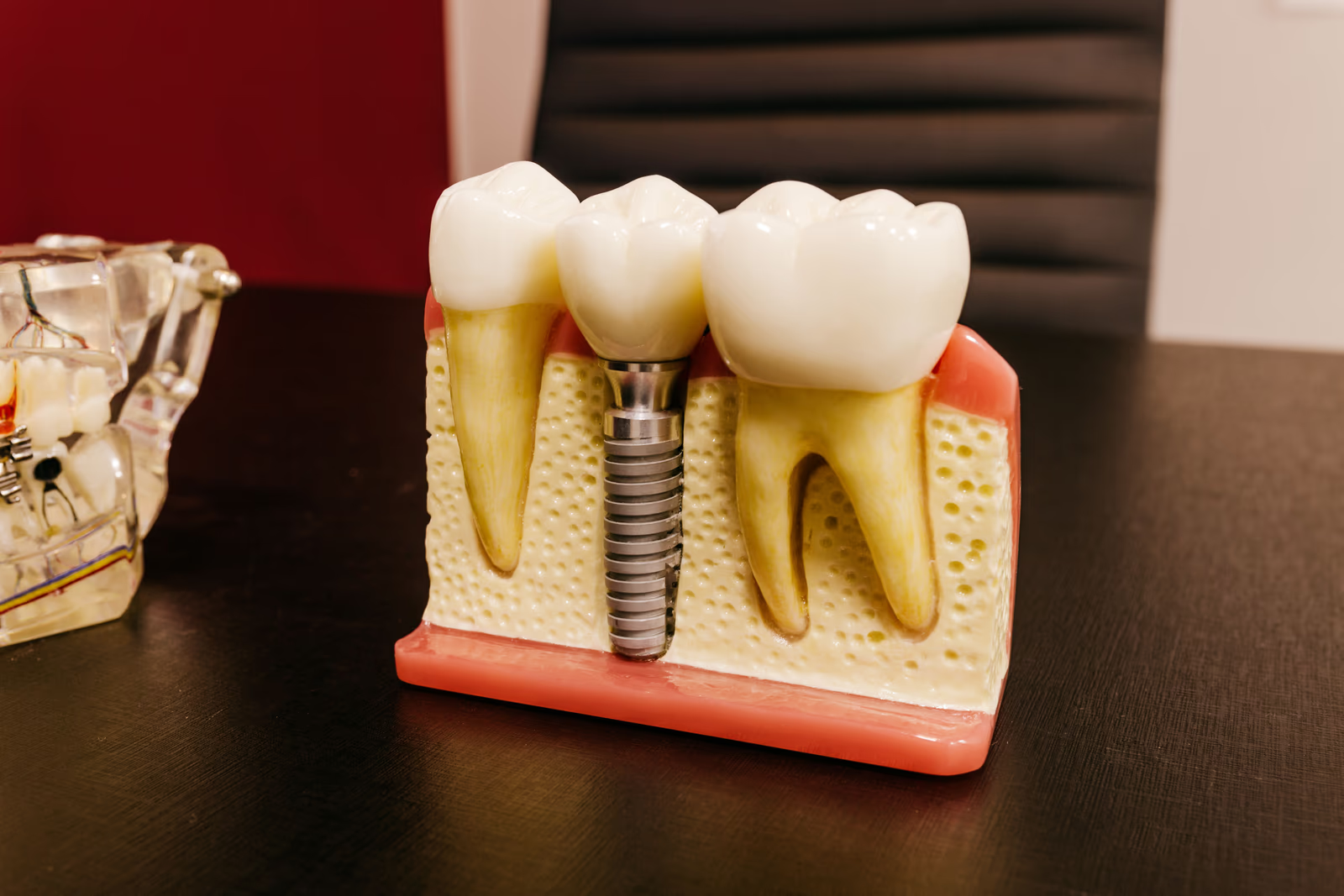
Implants. These patients are researching a significant investment, sometimes replacing a single tooth, sometimes a full arch. They search "dental implants cost," "all-on-4," and "implant dentist near me," and they want to understand the options, the process, the timeline, and the price range before they commit. Cost is almost always on their mind, and a page that addresses it honestly, even in ranges, earns trust that a page dodging it does not. It also helps to explain what makes implants worth the investment, and what the alternatives are, so a patient can weigh the whole decision rather than just the price.
Veneers. These patients are usually motivated by appearance, and by a specific dissatisfaction they have carried for a while. They search "veneers cost," "veneers before and after," and "smile makeover," and they respond powerfully to visual proof. Real results, shown tastefully and with consent, do more for them than any amount of description. These patients also want to understand the process and the upkeep, so a page that walks them through what getting veneers actually involves, and how to care for them afterward, stands out from one that only shows the finished smile.
Invisalign and clear aligners. These patients, often adults, are weighing convenience and discretion against traditional braces. They search "Invisalign vs braces," "clear aligners cost," and "Invisalign near me," and they want to know how it works, how long it takes, and what it costs next to the alternatives. Because many are choosing between providers as much as between products, a practice that presents itself as experienced and genuinely trustworthy with clear aligners has a real edge.
In each case, the pattern is the same. The patient has real questions, and the practice that answers them best tends to win the visit.
What these searches demand
Treatment searches are competitive, so being found for them takes more than a passing mention on a services page.
The patient wants substance. Someone considering implants wants to understand the options, the process, the recovery, and yes, the cost. A page that treats the treatment seriously, answering the real questions a patient has, earns visibility that a thin, generic page never will. This is the difference between a site that lists a treatment and one that genuinely helps a patient decide.
The patient wants proof. High-value treatments are high-stakes for the patient. Real results, honest reviews, and clear before-and-after evidence carry enormous weight. A practice that shows its work, within the bounds of patient consent and good taste, gives a hesitant patient a reason to choose it.
The patient often searches locally. Many treatment searches include a place: "veneers Toronto," "implant dentist near me." Being clearly present in your area, and clearly associated with the treatment, is what connects the two.
The cost question
For high-value treatments, one question sits behind almost every search: what does it cost? Patients researching implants, veneers, or Invisalign are weighing a significant expense, and cost is usually their first and biggest concern. How a practice handles this on its website matters more than almost anything else.
The instinct is often to avoid pricing entirely, to make the patient call. But a page that dodges cost frustrates the very patients it is trying to attract, and sends many of them to a competitor who is more forthcoming. The stronger approach is honest context: explaining what drives the cost, giving realistic ranges where possible, and being clear about what a price does and does not include. This does not mean publishing a rigid price list, because every case differs. It means treating the patient's real question with respect rather than evasion. A practice that helps a patient understand the investment, honestly, earns trust that a coy one never will, and tends to attract patients who arrive already prepared for the conversation.
A note on honesty
There is a line worth respecting here. Patients researching expensive treatments are open to being oversold, and search engines increasingly reward content that genuinely helps over content that simply sells. The practices that win these searches over the long run are the ones that inform honestly rather than pressure. That means being straight about cost, candid about what a treatment can and cannot do, and clear about the alternatives.
It is also, not by coincidence, how you attract better patients. Someone who arrives already informed and reasonable, because your site treated them like an adult, is a far easier and more rewarding patient than one drawn in by a promise that was never quite true.
From a search to a booked case
Ranking for a treatment is only half the work. The other half is turning the patient who finds you into one who books. A high-value treatment is a considered decision, and a patient rarely commits on their first visit to a website. So the page that wins the case does more than rank: it builds enough trust and answers enough questions that the patient is willing to take the next step.
That means making the path from interest to consultation easy and inviting: a clear, low-pressure way to ask a question or book a consultation, reassurance that the first step is a conversation rather than a commitment, and content that leaves the patient feeling informed rather than sold to. The practices that grow their high-value cases are the ones that treat the website not as a brochure but as the beginning of a relationship, guiding a serious patient gently from a search toward a chair.
Where to go next
Ranking for treatments is one piece of a practice's search strategy. For the full picture, start with our guide to dental SEO for practices. From there, see how dental specialists approach search and how independent practices compete with the dental groups online.
Which high-value treatment would you most like to grow this year, and does your online presence reflect that yet?