
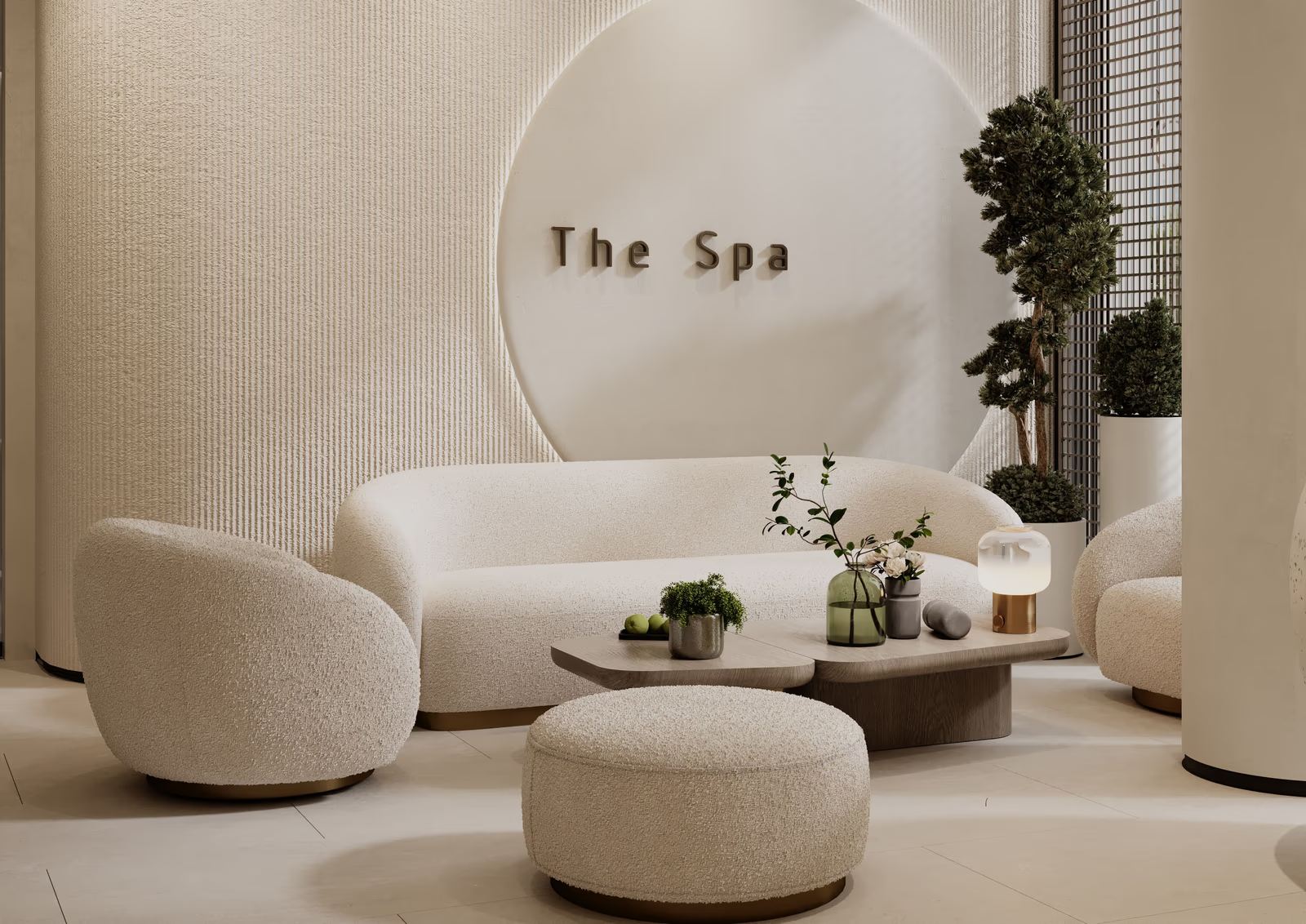
Aesthetics is a business of trust and beauty, and both are now judged first online. Before a client books a treatment at a med spa, chooses an aesthetic clinic for injectables or laser, or buys from a skincare brand, they form an impression on a website, and much of their decision is made there. A polished, credible, well-built site draws them in and turns interest into a booking or a sale. A dated or amateur one sends them to a competitor who looks more like the expert they want. Med spa website design is the work of making that first impression the one that wins the client.
This guide covers what a website needs to do for a med spa, an aesthetic clinic, or a beauty brand, what separates a site that fills a calendar from one that does not, and the particular care the field requires, whether you are building your first site or replacing one that no longer serves you.
What a med spa or clinic website is really for
It is tempting to treat an aesthetics website as an online brochure, a place that lists treatments and an address. A good one does far more, and it does three jobs at once.
It gets you found, by being built well enough for search engines to trust and giving nearby clients genuine reasons to land on it. It earns trust, by presenting your med spa or clinic as a credible, professional, safe place to have a treatment, which for anything touching a client's face or body is the decisive question. And it converts, by making the next step, booking a consultation or a treatment, effortless. A site that only lists services is a brochure. A site that does all three becomes the engine that fills the clinic's calendar.
For a beauty or skincare brand, the shape is slightly different, the goal is a sale rather than a booking, but the logic is the same: be found, earn trust, and make buying easy. Most of this guide leads with med spas and aesthetic clinics, where booking and credibility dominate, and treats the product-brand side as the related but distinct path it is.
Why the website matters so much in aesthetics
A few things make aesthetics unusually dependent on a strong website.
It is a high-trust decision. A client considering a treatment is deciding who to let work on their face or body, and that is a decision made largely on confidence: does this place look expert, safe, and reputable. A great deal of that confidence is formed, or lost, on the website, before the client ever calls.
It is intensely visual. Aesthetics is about appearance, and clients expect a site that looks the part, beautiful, current, and professional, because a med spa whose own website looks dated implicitly promises dated results. The look of the site is itself a claim about the quality of the work.
It is local and high-consideration. Most med spa and clinic clients are searching nearby, and they research carefully before booking something that costs real money and affects how they look. The website is where that research happens, and the clinic that presents itself most convincingly there tends to win the booking.
Put together, these make the website less a marketing nicety than the single most important place a med spa or clinic earns, or loses, new clients.
What a med spa or clinic website needs
A handful of things do most of the work.
Credibility and trust. Above all, the site has to make a client feel confident and safe. Clear information about the practice, its practitioners and their qualifications, its standards, and its reputation all signal that a client is in expert hands. In a field where clients are trusting you with their appearance and safety, credibility is the foundation everything else rests on, and it deserves real attention in its own right.
Visual proof. Aesthetics clients want to see results, and a well-presented before-and-after gallery is often the most persuasive thing on the site, turning a browser into a booking by showing what the practice can actually do. Handled well, and handled with the consent and honesty the field requires, visual proof is central to an aesthetics website.
Easy booking. For a med spa or clinic, the point of the site is to fill the calendar, and that means making it easy for a client to take the next step, booking a consultation or a treatment without friction. A booking path that is simple and inviting converts interest into appointments; a clumsy one loses clients who were ready to commit.
A site that looks the part. Because aesthetics is visual, the design itself has to be beautiful, current, and professional, reflecting the quality and character of the practice. A generic or dated design undercuts the practice's credibility no matter what the words say.
A mobile-first, fast experience. Most clients will find and judge a med spa on a phone, often while researching in a spare moment, so the site has to work beautifully and load quickly on a small screen, or it fails most of the people who see it.
Genuine accessibility. A professional site is usable by everyone, which is both good practice and, in many markets, a regulatory expectation for a business of this kind.
The cosmetic-to-medical spectrum
Not every aesthetics practice sits in the same place, and the website has to reflect where a particular one does. At one end are cosmetic services, med spas and wellness studios offering non-medical treatments like facials, brow and body services, and light treatments. At the other are medical and cosmetic practices, dermatology clinics, plastic surgery practices, and med spas offering medically supervised procedures like injectables, laser, and more clinical treatments. Most practices sit somewhere along this spectrum, and many offer a mix.
Where a practice sits shapes what its website must convey. The more medical the services, the more the site has to establish clinical credibility, the practitioners' medical qualifications and oversight, the seriousness and safety of the practice, and the more carefully it has to handle content about treatments. A purely cosmetic studio can lead more with experience and atmosphere; a medically supervised clinic has to lead with credibility and clinical trust. A good aesthetics website is built for the specific practice's place on that spectrum, rather than treating a medical clinic and a cosmetic studio as the same thing.
The regulated reality
Aesthetics, especially at the medical end, is a regulated field, and that shapes what belongs on a website. Depending on the market, cosmetic and medical-cosmetic practices are governed by health regulators and medical or esthetician boards, and advertising is subject to strict rules on claims and substantiation, through bodies and frameworks such as Health Canada, the FDA, the MHRA, the FTC, the ASA, and others. Good aesthetics website content works within all of that. It educates and builds trust, helping clients understand services and make sense of their options, and it stops short of specific medical advice or treatment recommendations, which belong to the practice's own licensed practitioners.
The practical lines are worth stating plainly. Content that discusses specific treatments, particularly for medically supervised procedures, should be reviewed by the practice's own physician or practitioner before it is published, and the site should describe outcomes honestly and within the rules, favouring careful, substantiated language over sweeping promises about results. Before-and-after imagery has to be handled as a consent matter, with proper client permission and honest representation, according to the rules of the market. And anything touching patient records or medically sensitive communication belongs in the practice's own compliant, licensed systems, with the website providing the front-facing layer rather than trying to be the clinical system itself. Handled this way, the regulated nature of the field is not a limitation on the website but part of what makes it credible, because a site that is careful, accurate, and honest reads as more trustworthy, not less, which is exactly what an aesthetics client is looking for.
Two business models: clinics book, brands sell
It is worth being clear that the aesthetics field contains two related but distinct kinds of business, and their websites have different goals. A med spa or clinic wants bookings: the site exists to turn a researching client into a booked consultation or treatment, so credibility, visual proof, and an easy booking path are what matter most. A beauty or skincare brand wants sales: the site is a store, and product presentation, a trustworthy checkout, and an easy path to purchase are what matter most.
Both share the same foundations, being found, earning trust, working beautifully on a phone, but they optimize for different actions, a booking versus a sale. A practice that does both, a clinic with a retail product line, needs a site that serves each goal clearly. Understanding which model a site is really for, and building it around that goal, is much of what separates an aesthetics website that performs from one that merely looks nice. This guide leads with the booking-driven med spa and clinic; the product-brand path is covered in its own right.
What good aesthetics website design looks like
A good med spa or clinic website makes a client feel, quickly and clearly, that this is an expert, professional, trustworthy place to have a treatment, and then makes booking effortless. It looks beautiful and current, befitting a business built on appearance. It shows credible proof of results, handled honestly and with consent. It respects the regulated nature of the field, educating carefully and leaving clinical specifics to the practitioners. It works flawlessly on a phone. And above all, it earns the confidence that turns a cautious researcher into a booked client. It does not oversell, make reckless promises, or hide behind generic stock imagery. It reassures, shows, and converts.
Questions practices often ask
How much should a med spa website cost? It varies with what you need, and it is worth being wary of both the cheapest template options, which rarely convey the credibility or polish aesthetics requires, and inflated ones. The better question than price alone is return: a website that fills your calendar with new clients pays for itself many times over, while a cheap one that looks untrustworthy is the more expensive choice.
Do we really need a new site, or will our old one do? If your current site looks dated, is awkward on a phone, lacks credible visual proof, or makes booking difficult, it is very likely costing you clients you never hear about, to competitors who present themselves better. In a field where the site's look is itself a claim about your results, a tired website quietly turns people away.
What matters most if we can only fix a few things? If med spa website design comes down to a few essentials, they are credibility, visual proof, and easy booking. Make the site look professional and trustworthy, show real results honestly, and make booking effortless. Those do most of the work of turning researchers into clients.
How do we handle content about treatments safely? Educate rather than advise, describe results honestly and within the advertising rules, have content about medical treatments reviewed by your own practitioners, and leave specific recommendations to a real consultation. Handled that way, content builds trust and stays on the right side of the line.
Where to go from here
A website is one of the most important investments a med spa, clinic, or beauty brand makes in its own growth, and it is where client trust and bookings begin. To go further, see how we approach med spa website design, and read into the specifics: building credibility on a med spa or clinic website, before-and-after galleries that turn browsers into bookings, booking flows that fill an aesthetic clinic's calendar, and websites for beauty and skincare brands.
When a prospective client finds your med spa or clinic online today, does your website make them feel they have found the safe, expert, reputable place they were hoping for, or does it give them a reason to keep looking?