
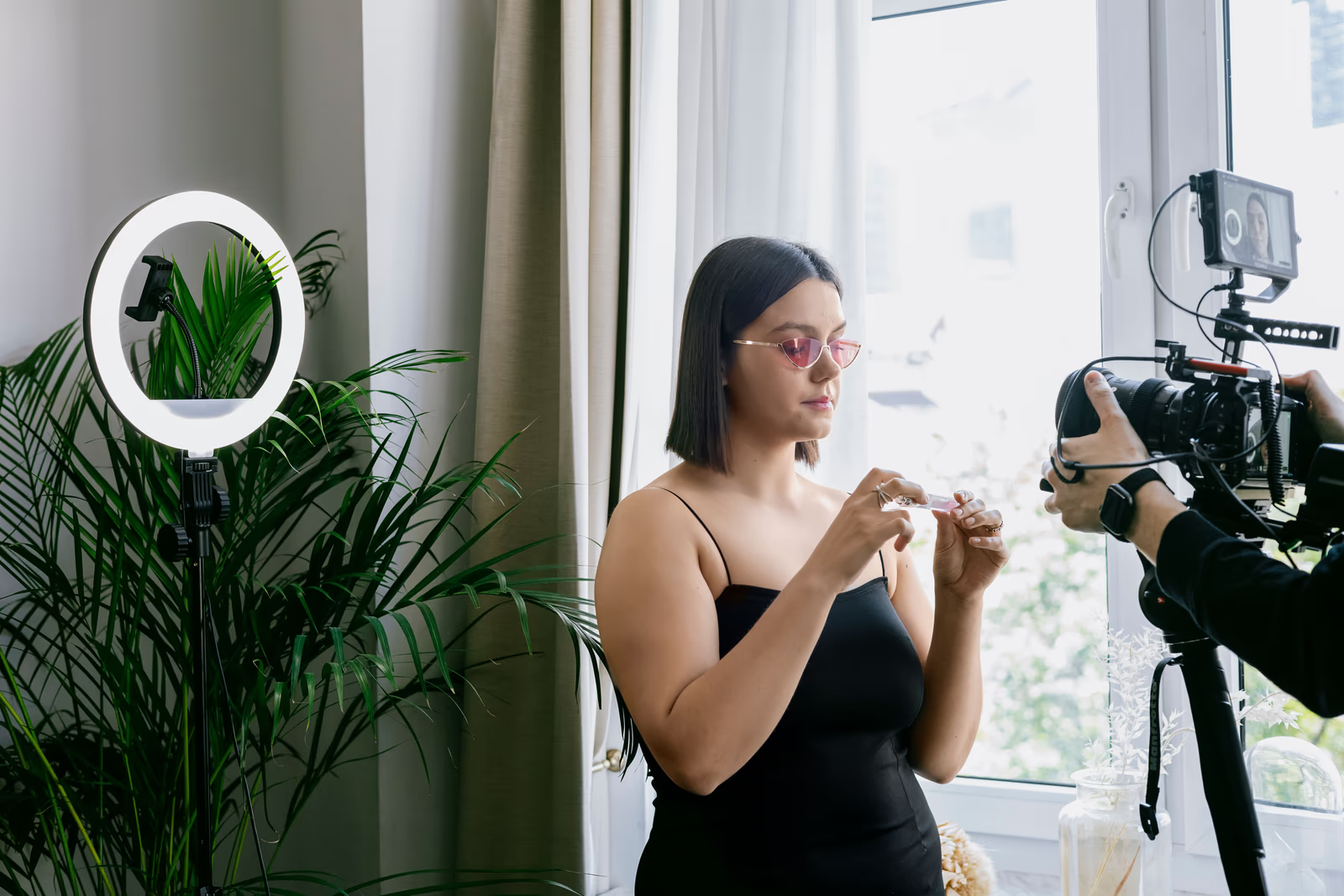
Influencers have become one of the most powerful forces in beauty. A trusted voice with an engaged audience can introduce a brand or clinic to many potential clients at once, with a credibility that advertising struggles to match, which is why beauty influencer marketing has grown so central to how beauty businesses reach people. But it works differently for a med spa than for a product brand, it comes with real rules that must be followed, and, like all social effort, it only pays off where it connects to something that converts. Here is how med spas and beauty brands actually use influencers, and how to do it well.
Why influencers work so well in beauty
Influencer marketing suits beauty especially well, for a few reasons. Beauty is visual and experiential, and influencers show products and results in a real, relatable way that static advertising cannot. It is trust-driven, and a recommendation from a voice an audience already trusts carries far more weight than a brand promoting itself. And it is personal, so seeing a real person with real results or a genuine product experience helps an audience imagine the same for themselves. When an influencer an audience trusts genuinely recommends a beauty product or clinic, it can be more persuasive than almost any other form of marketing, because it combines reach, credibility, and visual proof at once. It is worth noting how well this fits beauty specifically compared with other fields. In a category where clients are cautious, research carefully, and rely heavily on seeing real results and trusting the source, an influencer supplies exactly what a hesitant beauty client wants: a real person, showing a real outcome, whose word the client already trusts. Few forms of marketing answer a beauty client's particular doubts so directly.
Choosing the right influencers
One of the most important parts of beauty influencer marketing, and one of the most misunderstood, is choosing the right influencers, because fit matters far more than raw follower count. A smaller influencer whose audience genuinely matches the people a business wants to reach, and who authentically fits the brand or clinic, is usually far more valuable than a much larger one whose audience is broad, mismatched, or disengaged. Relevance and authenticity beat size.
For a clinic, this means influencers whose audience actually includes local people who could book; for a brand, influencers whose audience genuinely fits its products and values. In both cases, it means voices whose recommendation will feel authentic rather than bought, because an influencer who genuinely fits a brand recommends it more convincingly, and their audience trusts it more. The temptation to chase the largest reach available often leads to spending on audiences that do not convert, or on partnerships that feel forced and persuade no one. The businesses that get the most from influencer marketing are usually those that choose carefully for genuine fit, prizing relevance and authenticity over the impressive-looking numbers that may not translate into anything.
How med spas and clinics use influencers
For a med spa or aesthetic clinic, influencer marketing is usually local and centred on trust. A clinic might work with local influencers who genuinely experience a treatment and share it with their audience, introducing the clinic to local people who trust that voice, and showing real results and a real experience in the process. Because a clinic is local, the aim is not the largest possible reach but the right local reach: influencers whose audience includes the people a clinic could actually serve.
This works best when it is genuine and handled with care. An influencer's experience should be real, their results honest, and, crucially, any before-and-after or client imagery shared must be handled with proper consent, exactly as it would be anywhere else. Handled genuinely, a trusted local voice sharing a real, positive experience of a clinic can be a powerful way to build local awareness and trust, feeding the local bookings a clinic depends on.
How beauty brands use influencers
For a product brand, influencer marketing usually reaches wider. A brand might work with influencers to introduce its products to new audiences well beyond any local area, through genuine reviews, demonstrations, and recommendations, and often formalizes these relationships through affiliate arrangements, where influencers share trackable codes or arrangements tied to the sales they drive. For a brand, influencers are a way to build awareness and desire at scale, reaching potential customers who trust the voice recommending the product.
As with clinics, this works best when genuine. Audiences, and beauty audiences especially, are increasingly discerning about influencer content and quick to detect and dismiss recommendations that feel inauthentic or purely paid. A brand is generally better served by genuine relationships with influencers who authentically like its products than by transactional promotion that an audience sees through. Real enthusiasm, honestly shared, is what makes influencer marketing work. This is why gifting products to influencers who genuinely like them, and building longer-term relationships with authentic advocates, tends to outperform one-off paid promotions that an audience recognizes as advertising. An influencer who has genuinely used and liked a product over time recommends it with a conviction that a single sponsored post rarely carries, and that conviction is precisely what persuades their audience.
Where influencer marketing goes wrong
Influencer marketing fails in a few recognizable ways, all avoidable. The most common is inauthenticity: partnerships that feel purely transactional, with an influencer promoting something they clearly do not use or care about, which a discerning beauty audience sees through and dismisses, sometimes damaging both the influencer's and the brand's credibility. Another is poor fit, reaching an audience that has little genuine interest in the product or cannot actually access the clinic, so the reach produces little.
Then there are the compliance failures, undisclosed paid content, or claims that overreach or mislead, which risk real trouble under advertising rules and erode the trust the whole approach depends on. And there is over-reliance: treating influencer marketing as a substitute for a strong brand, product, and website rather than a channel that feeds them, so that the attention it generates lands on a weak foundation and converts poorly. Each of these turns a promising channel into wasted effort. Handled the other way, with genuine, well-chosen partnerships, honest and disclosed content, and a strong owned foundation to convert the attention, influencer marketing does what it promises. The failures come not from the channel itself but from using it carelessly.
The disclosure and honesty rules
Influencer marketing is governed by real rules, and following them is both required and, done well, good for trust. The central one is disclosure: when an influencer is paid, gifted product, or otherwise incentivized to promote something, that relationship must be clearly disclosed to their audience, under advertising rules such as the FTC's in the USA, including its endorsement guides, and the ASA's in the UK. Undisclosed paid promotion is a genuine violation, and the responsibility extends to the brands and clinics working with influencers, not the influencers alone.
Alongside disclosure sit honesty and consent. Claims made in influencer content, about what a product or treatment does, are subject to the same accuracy and substantiation rules as any other advertising, and cannot mislead. And any before-and-after or client imagery shared through influencer content requires proper consent, as everywhere in aesthetics. These are the business's own responsibilities to manage, and where a business builds infrastructure to support influencer or affiliate efforts, the sensible approach is to structure it so that disclosure and compliance requirements are surfaced and easy to meet, while the business and its own compliance advisers confirm that everything is handled correctly. Taken seriously, these rules are not just obligations; they protect the trust that makes influencer marketing work at all, since an audience that senses honesty and clear disclosure trusts the recommendation more.
Where influencer marketing meets your website
Like all social effort, influencer marketing reaches people, but it converts them somewhere, and that somewhere is your owned property. An influencer sends their audience toward a brand or clinic, and what happens next depends on the website they arrive at: a person persuaded by an influencer to consider a treatment or a product still has to be able to book or buy, easily and convincingly, once they follow through. Influencer attention landing on a weak site is largely wasted, just as any social attention is.
There is more the owned foundation can do here. The genuine content influencers and customers create can live on and be showcased on a brand's own website, where it builds trust with every visitor rather than only those who saw it on a feed, and where the business, not the platform, controls it. For brands running affiliate or influencer programs, the tracking and program infrastructure behind them sits on owned property too. And the genuine recognition a business earns through authentic influencer and press content contributes to the authority that strengthens its search presence over time. Influencer marketing, in other words, is most valuable when it feeds a strong website and search presence built to capture, convert, and compound the attention it brings.
Where to go next
Influencer marketing brings people to your brand; your website is where they become clients and customers. For the full picture, see our guide to social media and influencer marketing for beauty and how we approach med spa and clinic web design and med spa SEO, the owned foundation that turns influencer attention into business.
When an influencer sends their audience to your brand or clinic, does the website they land on convert that hard-won interest into a booking or a sale, or does it let a warm, trusting visitor slip away?