
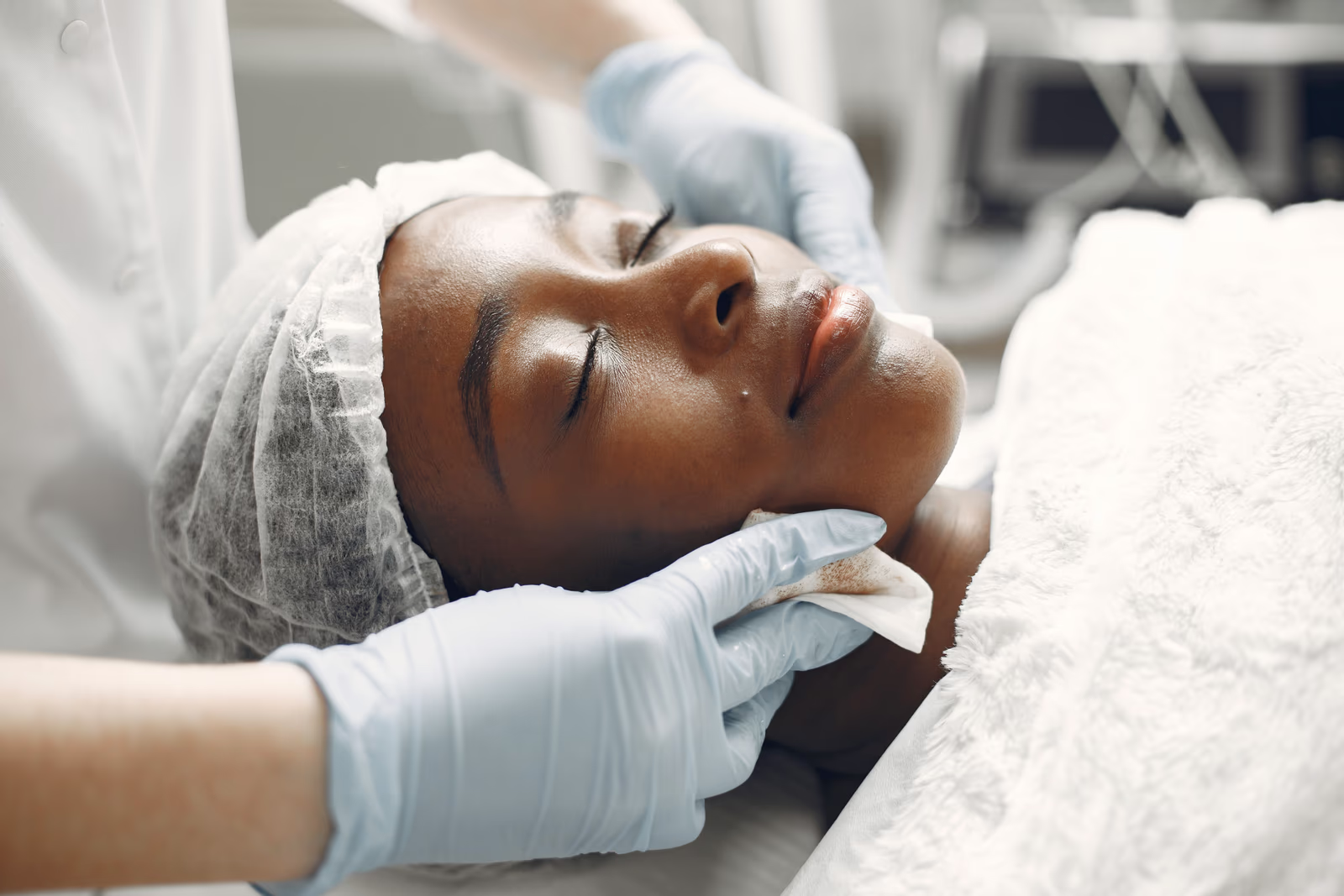
Few industries live on social media the way beauty does. Aesthetics is intensely visual, treatments and products are made to be seen, and much of how people discover, judge, and choose beauty brands and clinics now happens on social platforms. That makes social media, and influencer marketing as one part of it, a genuine force in beauty. But attention on social media only becomes bookings and sales somewhere, and that somewhere is your website and your search presence. This is a look at how beauty social media marketing works, and, just as importantly, how the owned foundation beneath it turns social attention into actual business.
Why social media matters so much in beauty
A few things make social media unusually central to beauty.
It is visual, and so is social. Beauty is about how things look, and social platforms are built around images and video, so beauty is a natural fit for social media in a way many industries are not. Results, products, and transformations are exactly the kind of content social platforms reward and people share.
It is where discovery happens. A great many people now discover beauty brands, treatments, and clinics through social media, scrolling, following, and being shown content, long before they search for a specific business. For beauty, social is often the top of the funnel, where awareness begins.
It builds trust and community. Beyond discovery, social media lets a beauty business show its work, its personality, and its results over time, building familiarity and trust with an audience. For a field built on trust, that ongoing presence matters.
Together, these make social media a real part of how a beauty business becomes known and trusted, for both med spas and clinics building a local following and product brands reaching a wider audience. It is worth saying that this is not optional in the way it might be for some businesses. For many beauty brands and clinics, a meaningful share of potential clients now begins on social media, so a business with little or no social presence is simply absent from part of where its future clients are looking. Social has become one of the ordinary places beauty is discovered, which makes some genuine presence there a part of being findable at all.
How med spas and brands use social differently
Although social media matters to both, a med spa or clinic and a beauty brand use it differently, and it helps to see the distinction. A med spa or aesthetic clinic is local, so its social presence is largely about building a following and reputation in its own area: showing genuine results and the experience of the practice, building familiarity and trust with local people, and staying visible to a community that may eventually book. For a clinic, social is a way to be known and trusted locally, feeding the local bookings the business depends on.
A beauty brand sells products more widely, so its social presence reaches for a broader audience: showcasing products, building a brand identity people want to be part of, and often working with influencers to reach new potential customers well beyond any local area. For a brand, social is a way to build awareness and desire at scale, feeding the sales its business depends on. The content, the audience, and the goal differ, local trust and bookings for the clinic, broad awareness and sales for the brand, but the underlying logic is the same: social builds the attention, and the owned foundation converts it. Recognizing which kind of business a social presence serves shapes how it should be used.
What social media does, and does not, do
It is worth being clear about social media's role, because it is powerful but partial. Social media is excellent at building awareness, showing your work, and drawing an audience's attention and interest. What it does not do, on its own, is convert that attention into a booking or a sale. A person who discovers a clinic on social media and wants to book, or sees a product and wants to buy, has to go somewhere to do it, and that somewhere is the website.
This is the crucial point that a great deal of beauty marketing misses. Social media brings people to the edge of becoming a client or customer; the website is where they actually become one. A beauty business can build a large, engaged social following and still convert little of it if the website that following lands on is weak, hard to book or buy from, or unconvincing. Social media and the website are not alternatives; they are two halves of one path, and the attention social earns is only as valuable as the site that converts it.
The owned foundation beneath social
This is where the foundation matters. Social media and influencer efforts are how a beauty business reaches people; the website and search presence are the owned property where that reach becomes business, and where much of the lasting value accumulates. Several connections are worth understanding.
The website converts the attention. Social drives people to the site, and the site turns them into bookings and sales, so a strong, convincing, easy-to-use website is what makes social effort pay off. Attention driven to a weak site is largely wasted.
Search and social reinforce each other. Social builds awareness and can lead people to search for a brand or clinic by name, while a strong search presence captures the people social has made curious, and the recognition a business earns through genuine social and influencer content contributes to the authority that search rewards. The two channels compound rather than compete.
The website can host what social creates. The genuine content a beauty business and its audience generate, real customer posts, influencer content, user-generated proof, can live on and be showcased on the website, where it builds trust with everyone who visits, not just those who saw it on a feed. And for brands running influencer or affiliate efforts, the tracking and program infrastructure behind them lives on owned property too.
The point is that social and influencer marketing are most valuable when they feed a strong owned foundation. Building that foundation, a website that converts and a search presence that captures and compounds the attention, is what turns social effort into durable business rather than fleeting attention.
The mistake of measuring the wrong thing
A common and costly mistake in beauty social media marketing is measuring the wrong thing, chasing followers, likes, and engagement as if they were the goal, rather than the bookings and sales they are meant to lead to. A large following and high engagement feel like success, but they are only valuable insofar as they translate into business, and a business can have impressive social numbers and little to show for them if that attention never converts.
What matters is not the size of the audience but what the audience does: how many of them become clients or customers. This reframes social media from a popularity contest into what it actually is, the top of a path toward business, and it puts the focus where it belongs, on whether social attention is being channelled to a foundation that converts it. A beauty business is far better served by a modest, engaged following that reliably converts on a strong website than by a large one whose attention leaks away on a weak one. Judging social by the business it produces, rather than by vanity metrics, is what keeps the effort honest and pointed at the goal, and it is why the owned foundation the attention flows to matters more than the raw numbers on any feed.
Influencers as one channel
Influencer marketing deserves particular mention, because it has become a major force in beauty. Influencers, people with an engaged audience who trust their recommendations, can introduce a brand or clinic to many potential clients at once, with the credibility of a trusted voice. For beauty especially, where trust and visual proof matter so much, a genuine recommendation from a trusted influencer can be powerful. How med spas and beauty brands actually work with influencers, and the important rules that govern it, is a subject in its own right, covered separately.
The disclosure, consent, and claims care
Social and influencer marketing in beauty come with real responsibilities, on a few fronts, and getting them right protects both the business and its audience. The first is disclosure: sponsored or incentivized content, including influencer posts, must be clearly disclosed, under advertising rules such as the FTC's in the USA and the ASA's in the UK. Content that promotes a product or service in exchange for payment or free product has to make that relationship clear, and this applies to the influencers a brand works with as much as to the brand itself.
The second is consent, especially for the client images beauty relies on. Any before-and-after or client imagery shared on social, as anywhere else, requires the client's proper consent, handled according to the market's rules. The third is claim accuracy: claims made in social and influencer content, about what a product or treatment does, are subject to the same honesty and substantiation rules as claims made anywhere, and cannot mislead. These are the business's own responsibilities to manage, and the sensible approach is to take them seriously, disclose properly, obtain consent, and keep claims honest, both because the rules require it and because an audience trusts a brand that is visibly straight with them.
What good looks like
Good social and influencer marketing for beauty builds genuine awareness, trust, and interest, and then channels it to an owned foundation, a website and search presence, that converts that interest into bookings and sales and compounds it over time. It is handled honestly, with proper disclosure, consent, and truthful claims. And it treats social not as the whole of marketing but as the top of a path that leads somewhere, the place a business actually captures the value of the attention it has earned. Social attention that leads nowhere is a missed opportunity; social attention that feeds a strong owned foundation is how a beauty business grows.
Where to go from here
Social and influencer marketing bring people to your brand; your website and search presence are where that attention becomes business. To go further, see how we approach med spa and clinic web design and med spa SEO, the owned foundation social effort converts through, and read into how med spas and beauty brands use influencers. For how the trust you build shows up as proof, our guide to reviews and social proof for beauty and aesthetics covers the related picture.
Is the social attention your beauty business earns landing on a website and search presence strong enough to convert it into bookings and sales, or is much of that hard-won attention slipping away where it should be turning into business?