
A specialist practice has a particular branding challenge. It has to convey expertise, reassure a patient who is often facing an unfamiliar procedure, and speak to a specific kind of patient, all at once. A general practice can aim for broad, warm appeal. A specialist has to be sharper about who it is for and what it stands for.
The good news is that specialty gives a practice a natural, built-in identity. The work is to express it well.
Why specialist branding is different
A specialist's patients are choosing skill. Whether they arrive by referral or by their own search, they want to feel they are in expert hands. So a specialist brand carries a heavier burden of conveying competence and confidence than a general one does. At the same time, many specialist procedures are anxiety-inducing, so the brand also has to reassure. Expert but approachable is the balance most specialties are looking for. That balance is harder than it sounds, and it is where specialist branding most often goes wrong, tipping either into cold clinical authority that frightens an already anxious patient, or into a warmth so soft it fails to convey the competence a serious procedure demands. Holding both at once, genuine expertise and genuine care, is the whole art of it.
The specific tone, though, shifts sharply from one specialty to the next, because the patients could not be more different.
Your specialty is a gift, not a constraint
It is tempting to see a narrow specialty as a limit on branding, less room to work with than a general practice has. In fact it is the opposite: the specialty hands you a ready-made, distinctive identity that a general practice has to work hard to create. You already know exactly who your patients are, what they need, what they fear, and what they hope for. That focus is a branding advantage most businesses would envy.
The work, then, is not to invent an identity but to express the one your specialty already implies, clearly and well. A specialist brand that leans into its focus, that looks and sounds unmistakably like a practice built around that procedure and that patient, is more compelling than one that hedges toward generic dental appeal. Specificity is not a weakness here. It is the whole point.
Matching the brand to the specialty
Pediatric dentistry speaks to children and, just as much, to their parents. Its branding can be playful, bright, and warm, designed to put a child at ease and reassure a parent that their child is in gentle, caring hands. Here, friendliness is not at odds with professionalism; it is part of it.
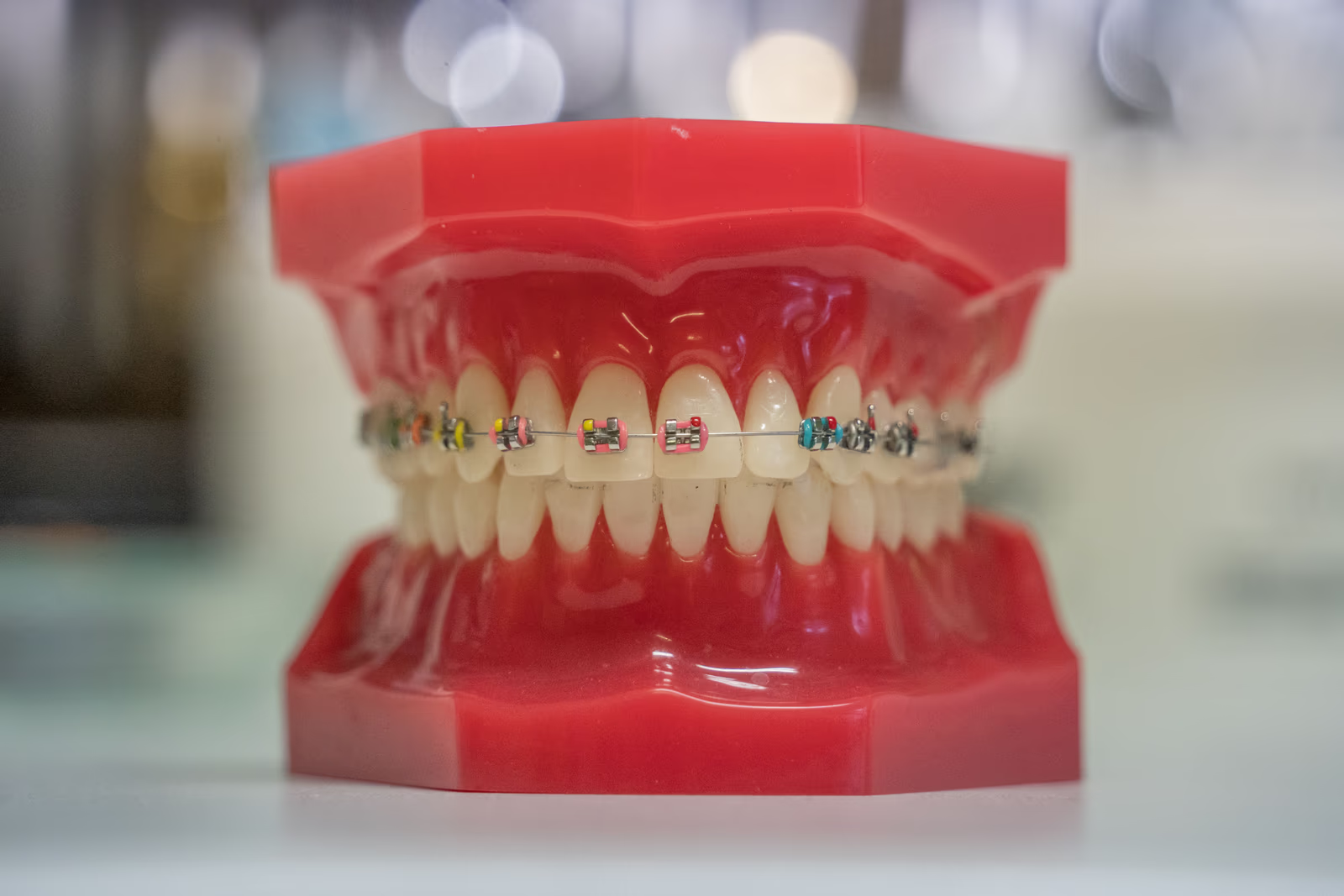
Orthodontics often speaks to teenagers, young adults, and their parents, and benefits from a modern, aspirational feel. The brand is really selling a journey to a better smile, so a fresh, optimistic identity fits.
Periodontics, endodontics, and oral surgery meet patients who are frequently worried, sometimes in pain, and facing serious procedures. Their branding does best when it is calm, confident, and clearly professional, projecting steady competence without coldness. These patients want to feel their specialist is both highly skilled and genuinely reassuring.
Prosthodontics and cosmetic-leaning practices speak to patients investing in significant, often transformative work. A refined, premium, precise identity signals the quality and care the patient is paying for.
In each case, the brand should feel like it belongs to that specialty and that patient, not like a generic dental brand with a specialty bolted on afterward. A patient can sense when a brand genuinely belongs to its specialty, because it speaks to their specific situation rather than to dentistry in general. That sense of being understood, of having found a practice truly built around what they need, is itself reassuring, and it is something only a brand tuned to the specialty can offer.
Conveying expertise without coldness
The trap for specialist branding is leaning so hard into competence that the brand becomes clinical and intimidating. Expertise reassures, but only when it is paired with warmth. The strongest specialist brands manage both: they look expert enough to trust with a serious procedure, and human enough that a nervous patient feels cared for rather than processed. Getting this balance right is the central branding challenge for most specialists. Lean too far toward competence and the brand becomes intimidating, which is the last thing a frightened patient needs. Lean too far toward warmth and it can seem to lack the authority a serious procedure demands. The specialists whose brands work best hold both at once: unmistakably skilled, and unmistakably kind.
Beyond the visuals: the specialist's voice
Branding a specialist practice is not only a matter of visuals; the voice matters just as much, and it shifts by specialty too. How a practice speaks, in its website copy, its explanations, its tone throughout, is a large part of how expert and how approachable it feels.
A pediatric practice's voice can be warm, friendly, and reassuring to a parent. A surgical practice's voice does best when it is calm, clear, and quietly confident, the tone of someone who does this every day and will look after you. A cosmetic practice's voice can be more polished and aspirational. In every case, the voice should match the specialty and the patient's state of mind, and it should carry genuine expertise without tipping into cold, intimidating jargon. A specialist that explains a frightening procedure in warm, plain, confident language has done more for its brand than any logo could.
The referral factor
For many specialists, referrals matter enormously, and branding plays a quiet role there too. When a general dentist refers a patient, that patient looks the specialist up. A confident, coherent, professional brand confirms the referral and reassures the patient that the recommendation was a good one. A weak or generic brand does the opposite, however skilled the specialist actually is. This is worth taking seriously, because a specialist's brand is quietly doing referral work all the time. Every referring dentist who sends a patient is, in effect, staking a little of their own credibility on the recommendation, and the patient who looks the specialist up is checking whether that stake was well placed. A confident, coherent, professional brand rewards the referring dentist's trust and confirms the patient's. A weak one quietly undermines both, and over time it can even make referring dentists hesitate, because a specialist who presents poorly reflects on those who send patients their way. For a specialist, the brand is not just marketing to patients. It is part of the professional relationship with the colleagues the practice depends on.
Where to go next
Specialist branding is one part of a practice's brand. For the full picture, see our guide to dental branding and how we approach dental website design and branding, and read on into designing a logo that builds confidence, the look and feel that makes a practice welcoming, and keeping a brand consistent.
Does your practice's brand actually feel like it belongs to your specialty, or could it be swapped onto any dental practice without anyone noticing?